Cocaine recovery for professionals
Cocaine Addiction Help in Cardiff: Your Options
Almost nobody searches for cocaine addiction help in Cardiff on a good day. It happens on a Monday morning with the curtains still shut, or at 2am when the house has gone quiet and you've finally stopped pretending the last few months have been fine. There's rarely a dramatic event behind it. No arrest, no ambulance, no scene anyone else witnessed. Just a private running total — the money, the missing Sundays, the promises you keep making to yourself — and a growing suspicion that this isn't something you're going to quietly outgrow.
If that's roughly where you are tonight, this page is for you. It isn't a directory dump and it isn't a scare piece. It's a straight account of what genuinely exists in Cardiff, what each option actually involves, and the smallest step you could take that doesn't cost you your privacy, your job or your name.
Cocaine addiction help in Cardiff: what actually exists
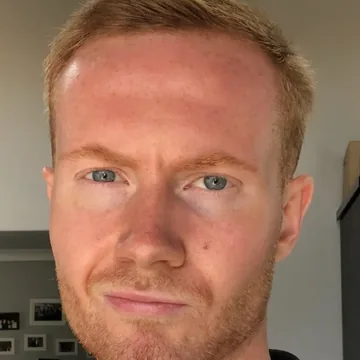
I'm Gary Clinton. I'm an addiction specialist and a CBT-trained therapist, and I'm in long-term recovery myself — so none of this is theory I picked up from a textbook. I work with people one to one, privately and online, which means I work with people in Cathays, Roath, Canton, Grangetown, Llanishen or Penarth without anyone needing to travel, book time off work, or be seen walking into a building.
Let me be straight about what I am and what I'm not. I don't run a clinic in Cardiff. There's no premises with my name over the door. What I offer is confidential, professional, one-to-one work that you do from your own home, built around your job and your family. For a lot of the people I work with — particularly those in demanding careers — that privacy is the precise reason asking for help finally became possible at all.
Alongside that, there is real free help in this city, and it's worth knowing exactly what it is:
- CAVDAS — Cardiff and Vale Drug and Alcohol Service, 0300 300 7000. This is the main front door for the whole Cardiff and Vale area. It isn't one organisation competing with others — it's an alliance that brings Barod, Recovery Cymru and Kaleidoscope together, so you don't have to work out in advance which provider you need. Self-referrals are welcome, meaning you can start this yourself today without a letter and without anyone else making the call for you. Phone lines run 9am to 5pm Monday to Friday, with routes to support outside those hours, and everything is free and confidential. More at cavdas.com.
- DAN 24/7 — 0808 808 2234. The all-Wales drug and alcohol helpline: free, confidential, open day and night, and available in Welsh on request. No name needed, no commitment made. If you want to say the words out loud to a stranger before you tell anybody who knows you, this is the lowest-risk call in the country.
- Recovery Cymru. A peer-led recovery community with a centre in Cardiff and another in the Vale, run by and for people in or seeking recovery — groups, activities and one-to-one peer support, free and confidential. Family and friends are included too. It's a different thing from clinical treatment, and for many people it's the part that makes recovery stick, because it answers the question nobody warns you about: what do I do with myself now?
- FRANK — 0300 123 6600. The free UK-wide line, also open around the clock, if you'd rather ring somewhere with no Welsh connection at all.
- Your GP. A GP can refer you into local services and talk through the physical side of what's been going on. That's a medical conversation covered by confidentiality — it is not a report to your employer, your professional body or anyone else.
- Peer support meetings. Cocaine Anonymous, Narcotics Anonymous and SMART Recovery all run meetings in and around Cardiff, and online besides. If you'd rather know what a room is like before you walk into one, I've written about how the main cocaine support groups actually differ.
None of these cancel each other out. Plenty of the people I work with are also ringing CAVDAS, also seeing their GP, also sitting in a meeting on a Thursday night. The aim was never to find the one perfect door. It's to open one.
60-second check-in
Quick check: where are you with it?
Five honest questions. Nothing is saved or sent — your result appears only on your screen.
1. Do you use more than you planned to, or carry on longer than you meant to?
2. Have you tried to cut down or stop and found you couldn't?
3. Does cocaine take up a lot of your time, money or headspace?
4. Has it caused problems with work, money or people close to you — and you carried on anyway?
5. Do you need more for the same effect, or feel low, flat or anxious when you stop?
The Cardiff bit: a capital city that behaves like a small town
Cardiff is a capital, but anyone who lives here knows it runs like a village with a stadium in the middle of it. You bump into people. Your colleague drinks in the same place as your neighbour's brother. That closeness is one of the best things about the city, and it's also the single biggest reason people here put off asking for help — because the fear was never really the therapy. It's being seen going in. It's someone you know clocking you walking through a door on a Tuesday afternoon and drawing the obvious conclusion before you've said a word.
Then there's the shape of the weekend. Cardiff empties into the city centre on match days and fills up again on a Saturday night, and a huge amount of the work here — hospitality, media, sales, events, the whole professional service belt around the bay — runs on evenings, on being good company, on the night carrying on somewhere after the official thing ends. In that atmosphere cocaine doesn't stand out. It's just what part of the room is doing.
Which is exactly the trap. When nothing about your use looks unusual to the people around you, nobody ever raises it, and no moment arrives to force your hand. The work still gets done. The rent's still paid. The only person who knows what Sunday afternoons have quietly become is you — and so it can run for a year, five years, ten, without ever producing the crisis people assume has to come first. If you've been telling yourself it's only ever a weekend thing, is weekend cocaine use really a problem? is worth ten minutes of your time. And if you've been waiting for something undeniable to happen before you take it seriously, read do you have to hit rock bottom to quit cocaine? The honest answer is no, and waiting is expensive.
Cardiff also carries a large student population across its universities, and that changes the picture again for people in their late teens and twenties, where heavy use can look indistinguishable from an ordinary big night out. I've written separately about what students should actually know.
Online one-to-one work removes the being-seen problem entirely. No reception, no waiting room, no car parked anywhere recognisable, nobody passing you on the pavement. It's a conversation between two people, and it stays there. It's also why I work with people right across the UK and Ireland — the same holds whether you're in Cardiff, Bristol or London.
What if you're not even sure it counts as a problem?
A lot of people searching for cocaine addiction help in Cardiff are holding everything together on the outside. Job's fine. Nobody's said anything. That makes it genuinely hard to judge whether you've crossed a line, because none of the film-version markers are anywhere in sight. I've written about that exact gap in the high-functioning cocaine user.
The useful question was never how much you use, or how often. It's what it's costing you — in money, in sleep, in headspace, in who you actually are with the people at home on a Sunday. If that lands, a calm read of am I addicted to cocaine? is the right next step, and the confidential self-assessment gives you a private read on where you stand without telling a soul.
The other half of it is shame, and shame keeps cocaine use running far longer than the drug alone ever would. Secrecy is the fuel. Nearly everyone I've sat with was convinced they were uniquely weak, uniquely far gone, uniquely past helping — and almost none of them were. If that's the voice in your head tonight, read this on cocaine and shame before you decide anything about yourself.
What one-to-one work actually looks like
People imagine something far more dramatic than it is. There's no confessing to a room of strangers. There's no label pinned on you. The first conversation is mostly me listening — what's been happening, for how long, what you've already tried on your own, and what you're most afraid of losing.
From there we build something practical around your real week: the specific nights it happens, the specific triggers, the specific people, and crucially what goes into the space it leaves behind. That last part matters more than anyone expects. Stopping is one job. Filling the gap is the other, and it's the one that decides whether this still holds in six months.
If you'd rather understand the road before committing to anything, can you quit cocaine on your own? is an honest look at what that takes, and rehab or outpatient for cocaine walks through how to judge the level of support you actually need. Most people in Cardiff who come to me don't need a residential programme. They need structure, honesty, and someone in their corner who isn't shocked by anything they say. And if the thing stopping you is the career worry, how to quit cocaine without derailing your career was written for exactly that fear.
If you or someone with you has chest pain, breathing difficulty, a seizure or a collapse after using cocaine, treat it as an emergency and call 999 immediately. Tell them exactly what was taken — it changes the treatment, and nobody there is interested in judging you.
If there's one thing I'd leave you with, it's this: getting help does not mean turning your life upside down tonight, or announcing anything to anybody. It means one confidential conversation — a call to CAVDAS on 0300 300 7000, a free call to DAN 24/7, a quiet appointment with your GP, or a private chat with me — from wherever you are in the city, at whatever pace you can genuinely manage.
That one step is what actually changes things, and it's far more within reach than it feels right now. I've watched people in precisely your position go from this exact moment to a settled, cocaine-free life. You don't have to do it alone, and you certainly don't have to do it publicly.
Related reading
- Am I addicted to cocaine?
- The high-functioning cocaine user
- Cocaine support groups: CA, NA, SMART and what each is like
Frequently asked questions
Where can I get cocaine addiction help in Cardiff?
CAVDAS, the Cardiff and Vale Drug and Alcohol Service, is the main front door and you can reach it on 0300 300 7000. It brings Barod, Recovery Cymru and Kaleidoscope together as one alliance, so you do not need to work out which provider you want before you ring. DAN 24/7 on 0808 808 2234 is the free all-Wales helpline if you want to talk to someone first, day or night. I also offer private one-to-one support online, which people across Cardiff use around their work and family life.
Do I need a GP referral for drug support in Cardiff?
No. CAVDAS welcomes self-referrals, so you can start this yourself without a letter and without waiting for anyone else to make the call. Going through your GP is still a sensible option if you want to talk about the physical side as well, and that conversation is confidential. Private one-to-one work with me needs no referral at all.
Is there a free drug helpline for Wales?
Yes. DAN 24/7 is the all-Wales drug and alcohol helpline on 0808 808 2234. It is free, confidential, open 24 hours a day, and available in Welsh on request. You do not have to give your name or commit to anything, which makes it a low-risk way to say the words out loud for the first time.
Will anyone find out if I get help for cocaine in Cardiff?
Support is confidential, and neither the NHS services nor your GP report it to your employer or a professional body. Cardiff can feel very small once you factor in your industry and your circle, which is why a lot of people here choose online one-to-one work. There is no reception, no waiting room and nobody watching you arrive.
Not sure where you stand?
Take the confidential 3-minute self-assessment — a private read on where you actually are. Or talk it through with Gary directly.
Take the self-assessment → Book a confidential chat