Cocaine recovery for professionals
Cocaine Addiction Help in Liverpool: Your Options Explained
If you're in Liverpool and you've typed something like cocaine addiction help into your phone tonight, I'd rather start by saying the obvious thing out loud: that search took more honesty than you're giving yourself credit for. Nobody looks this up while they still believe the story that it's all under control.
What usually happens next is nothing. Not because people don't want to stop, but because they've no idea what asking actually involves — who finds out, what goes on a record, whether they'll be treated like a write-off. So let me lay it out plainly. Here's what genuinely exists in Liverpool, what each route involves, and how to take a first step that doesn't cost you your privacy, your job or your good name.
Cocaine addiction help in Liverpool: the routes that actually exist
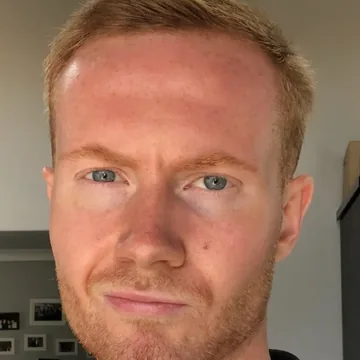
I'm Gary Clinton. I'm an addiction specialist and a CBT-trained therapist, and I'm in long-term recovery myself — so none of this is theory to me. I work with people one to one, privately and online, which means I work with people in the city centre, Allerton, Woolton, Crosby, the Wirral or anywhere across Merseyside without anyone having to travel, take a half-day, or be seen going through a door.
Let me be straight about what I am and what I'm not. I don't run a clinic in Liverpool. There's no building with my name on it. What I offer is confidential, professional, one-to-one work you do from your own home, fitted around your job and your family. For a lot of the people I work with — especially those holding down demanding careers — that privacy is the exact thing that made asking possible at all.
Alongside that, there is real free help in Liverpool worth knowing about:
- River, Liverpool's drug and alcohol service — 0151 706 7888. Delivered by Change Grow Live, this is the city's free, confidential service for adults, with hubs across Liverpool including the city hub at The Foundry on Henry Street. It's open access — you can refer yourself online, ring them, or walk into a hub without an appointment. You don't need a GP first, and you don't need to have hit any particular low point to qualify.
- FRANK — 0300 123 6600. Free, confidential, open around the clock, and no name required. If you want to say the words out loud to somebody before committing to anything at all, that's the lowest-risk call in the country.
- Your GP. A GP can refer you into local services and talk through the physical side of what's been going on. It's a medical conversation covered by confidentiality — not a report to your employer or to anybody else.
- Peer support groups. Cocaine Anonymous, Narcotics Anonymous and SMART Recovery all run meetings across Merseyside and online. If you'd like to know what each is actually like before walking into a room, I've written about how the main cocaine support groups differ.
None of these rule each other out. Plenty of the people I work with are also in touch with a local service, also seeing their GP, also sitting in a meeting on a Tuesday night. The aim was never to find the perfect door. It's to open one.
60-second check-in
Quick check: where are you with it?
Five honest questions. Nothing is saved or sent — your result appears only on your screen.
1. Do you use more than you planned to, or carry on longer than you meant to?
2. Have you tried to cut down or stop and found you couldn't?
3. Does cocaine take up a lot of your time, money or headspace?
4. Has it caused problems with work, money or people close to you — and you carried on anyway?
5. Do you need more for the same effect, or feel low, flat or anxious when you stop?
The Liverpool bit: a city where everyone knows everyone
Liverpool has something a lot of cities don't — a genuine sense of belonging. People stay. Families stay. You drink where your mates drink, your cousin works with your neighbour, and half the room at a match is somebody you went to school with. That closeness is one of the best things about the place. It's also, when you're trying to quietly sort out a cocaine problem, the thing that terrifies you.
Because the fear isn't therapy. It's being clocked going to it. And that fear is worth naming honestly, because it's what keeps people using for another two years while promising themselves they'll get a grip in the new year.
There's a second Liverpool factor, and it's the culture around the drug rather than the drug itself. In a lot of circles here cocaine has stopped registering as a drug at all — it's just what happens on a night out, at a stag do, after the match, in the back of the taxi at one in the morning. When everyone around you is doing it, the fact you can't leave it alone the way they seem to is almost impossible to see. If that's your situation, how to say no to cocaine when everyone around you is using is the practical read, because willpower alone tends not to survive a room full of mates.
Online one-to-one work removes the being-seen problem entirely. No reception, no waiting room, no car parked outside anywhere. It's a conversation between two people and it stays there. It's also why I work with people right across the north west — if you're the other side of the M62, the same applies in Manchester and in Leeds.
Where to start if you're not even sure it counts
A lot of people searching for cocaine addiction help in Liverpool are holding everything together on the outside. Work's fine. The bills are paid. Nobody's said a word. That makes it genuinely hard to judge whether you've crossed a line, because the film-version markers of addiction just aren't there. I've written about that gap in the high-functioning cocaine user.
The useful question was never how much you use. It's what it's taking from you — money, sleep, headspace, and who you are with the people at home on a Sunday. If that lands, an honest read of am I addicted to cocaine? is the right next step, and the confidential self-assessment gives you a private read on where you stand without telling a soul.
The other thing that stops people is shame, and shame is what keeps cocaine use running far longer than the drug itself would. Secrecy is the fuel. Almost everyone I've sat with was convinced they were uniquely weak, uniquely far gone, uniquely past helping — and almost none of them were. If that's the voice in your head tonight, read this on cocaine and shame before you decide anything about yourself.
What one-to-one work actually looks like
People imagine something far more dramatic than it is. There's no confessing to a room of strangers. There's no label stuck on you. The first conversation is mostly me listening — what's been happening, how long, what you've already tried, what you're most afraid of losing.
From there we build something practical around your real week: the specific nights it happens, the specific triggers, the specific people, and — this is the part most people underestimate — what goes into the space it leaves behind. Stopping is one job. Filling the gap is the other, and it's the one that decides whether this still holds in six months.
If you'd rather understand the shape of the road before you commit to anything, what happens when you stop cocaine covers the early weeks honestly, how to quit without derailing your career deals with the work fear head on, and rehab or outpatient for cocaine walks through judging the level of support you actually need. Most of the people who come to me don't need residential rehab. They need structure, honesty, and somebody in their corner who isn't shocked by a word of it.
If you or someone with you has chest pain, breathing difficulty, a seizure or collapse after using cocaine, treat it as an emergency and call 999 immediately. Tell them exactly what was taken — it changes the treatment, and nobody there is interested in judging you.
If there's one thing I'd leave you with, it's this: getting help doesn't mean turning your life upside down tonight, or announcing anything to anybody. It means one confidential conversation — a free self-referral to River, a call to FRANK, a quiet appointment with your GP, or a private chat with me — from wherever you are in Liverpool, at whatever pace you can genuinely manage.
That single step is the one that changes things, and it's far more within reach than it feels right now. I've watched people in exactly your position go from this moment to a settled, cocaine-free life. You don't have to do it on your own, and you certainly don't have to do it publicly.
Related reading
- Am I addicted to cocaine?
- Cocaine addiction help in Manchester: where to begin
- How to say no to cocaine when everyone around you is using
Frequently asked questions
Where can I get cocaine addiction help in Liverpool?
There are several real routes. River, delivered by Change Grow Live on 0151 706 7888, is Liverpool's free and confidential drug and alcohol service for adults, and it is open access — you can refer yourself online, ring, or walk into a hub. FRANK on 0300 123 6600 is free and confidential with no name needed. I also offer private one-to-one support online, which people across Liverpool and Merseyside use around work and family life.
Do I need a GP referral to get help with cocaine in Liverpool?
No. Liverpool's service accepts self-referrals, so you can start the process yourself today without going through anyone else. A GP is still a good route if you also want to talk through the physical side of things, and that conversation is confidential. Private one-to-one work with me needs no referral at all.
Will my employer find out if I get help for cocaine?
Getting support is confidential, and neither the local service nor your GP reports it to your employer. Liverpool can feel like a small place once you count your work, your local and your circle, which is why a lot of professionals choose online one-to-one work — there is no reception, no waiting room and nobody watching you arrive.
Everyone I know uses at weekends — is mine really a problem?
The question worth asking is not how you compare to the people around you, but what it is costing you in money, sleep, headspace and how you are with the people at home. Cocaine is normalised in plenty of circles in Liverpool, which makes it much harder to notice that you cannot leave it alone the way others seem to. If you are asking the question at all, that is usually reason enough for one honest conversation.
Not sure where you stand?
Take the confidential 3-minute self-assessment — a private read on where you actually are. Or talk it through with Gary directly.
Take the self-assessment → Book a confidential chat