Cocaine recovery for professionals
Cocaine Counselling and Therapy: What to Actually Expect
By the time most people go looking for cocaine therapy, they've already had the same private conversation with themselves a hundred times — the one that ends with I'll knock it on the head myself. Deciding to actually talk to someone is a much bigger step, and it usually arrives wrapped in dread. What will they make me say? Will I be judged? Is this the bit where my life officially becomes a problem on someone's file?
I've sat on both sides of that room, so let me take the mystery out of it. This is an honest walk through what cocaine counselling and therapy actually involve — what happens in a first session, the approaches that genuinely help, what the work asks of you, and how to choose between one-to-one, group, online and residential help. Almost nobody finds it as exposing as they feared. Most people walk out of a first conversation lighter than they walked in.
What cocaine therapy actually is — and what it isn't
Forget the film version. Cocaine therapy is not lying on a couch while a silent stranger picks apart your childhood, and it isn't a circle of people taking turns to confess. At its core it's a working relationship between you and one person who understands addiction from the inside out — someone whose entire job is to help you make sense of your own use and build a way out of it.
It also isn't a lecture. I'm not there to tell you cocaine is bad for you; you already know the case against it better than I ever could, because you've been living it. Good therapy is far more curious than that. Why this, why now, what does it actually do for you, what happens in the hour and the thoughts just before you pick up? We're trying to understand the machine before we start changing how it runs.
And this matters most of all: it is not a moral verdict. You are not being weighed up as a good person or a bad one. Nothing you say is going to make me think less of you — I promise you I have heard it before, and I have lived a version of it myself.
You don't have to hit some imaginary rock bottom to deserve help. The best moment to talk to someone is the moment you first start wondering whether you should. Earlier is easier — every single time.
The first session: what actually happens
The first session is mostly listening — my listening, not yours. I'll ask about your history with cocaine, how it started, how it's shifted over time, what a typical week looks like now — but at your pace, not as an interrogation. There's no drug test at the door and no obligation to perform remorse. If you're honest about where things really are, that's genuinely all I need to work with.
A lot of that first conversation is quietly diagnostic in the useful sense: together we work out how much of a grip it has, what's driving it underneath, and what's realistic to aim for. If you've never mapped that out honestly for yourself, it can help to do a private version first — I've written a plain-English guide to the signs you're addicted to cocaine, and the confidential self-assessment below gives you a read on where you actually stand before you say a word to anyone.
By the end of a first session you should walk away with two things: the felt sense that you've been understood rather than judged, and a rough sense of the direction of travel. Not a rigid programme handed down from on high — a direction, and a reason to come back.
60-second check-in
Quick check: where are you with it?
Five honest questions. Nothing is saved or sent — your result appears only on your screen.
1. Do you use more than you planned to, or carry on longer than you meant to?
2. Have you tried to cut down or stop and found you couldn't?
3. Does cocaine take up a lot of your time, money or headspace?
4. Has it caused problems with work, money or people close to you — and you carried on anyway?
5. Do you need more for the same effect, or feel low, flat or anxious when you stop?
The kinds of cocaine therapy that actually work
There is no single thing called "cocaine therapy" — there's a handful of well-evidenced approaches, and a good therapist blends them to fit the person in front of them. These are the ones that reliably carry their weight:
- Cognitive behavioural therapy (CBT). This is the backbone of most effective cocaine work, and it's my own main tool. CBT is practical rather than woolly: we map the chain that leads to a using episode — the trigger, the thought, the feeling, the decision — and then take it apart link by link, so you can see the choice points you never knew were there and build a different response. A great deal of managing cravings comes straight out of this work.
- Motivational work. Being in two minds is normal — part of you wants to stop and part of you really doesn't, and pretending otherwise gets you nowhere. Rather than argue you into changing, good therapy helps you surface your own reasons, because those are the only ones that hold up when things get hard.
- Relapse prevention. Naming your high-risk situations before they arrive, and having an actual plan for them, instead of relying on willpower in the exact moment willpower tends to desert you.
- Rewarding what's working. Some of the strongest research in stimulant recovery sits behind approaches that consistently reward drug-free progress — because cocaine hijacks the brain's reward system, and getting well partly means teaching that system to feel rewarded by the right things again.
Why there's no pill for this
People often ask me which medication will fix it, and it's a fair question — so here's the honest answer. Unlike alcohol or heroin, where medication can genuinely do some of the heavy lifting, there is currently no approved medicine that treats cocaine addiction directly. Decades of trials, and nothing has yet cleared the bar. In practice that means the psychological work isn't a gentle add-on to the "real" treatment — it is the treatment. A doctor may still help with something that sits alongside it, like depression or anxiety, and that can matter a great deal — but nothing on a prescription pad targets the cocaine itself. That part is done by you and a therapist, together.
What cocaine therapy asks of you
Here's the part nobody puts on the poster. Therapy isn't something done to you while you sit still and wait to be fixed. The people who get well are the ones who engage with it — who tell the truth even when it's unflattering, who turn up on the weeks they'd rather cancel, and who go and try the things we work out in the sessions in their actual life. The hour with me matters; the other hundred and sixty-seven hours in your week matter more.
It also asks for a little patience. There is no single golden conversation that dissolves a cocaine habit. What happens instead is quieter and far more durable — you come to understand your own patterns, you pick up some tools, and you practise them until they hold steady under real pressure.
The goal was never to spend the rest of my life white-knuckling through cravings. It was to become someone who didn't need the drug in the first place — and that's slower, and better, work.
One-to-one, group, online or residential?
There's no single right format — only the one that fits your life and the severity of what you're actually dealing with.
- One-to-one therapy gives you privacy and a plan built entirely around you. For the professionals I work with — people with a lot to protect — this is usually the right place to start.
- Group work, including fellowships like Cocaine Anonymous, offers something individual sessions can't: the plain relief of being in a room with people who get it, and the reminder that you are not uniquely broken.
- Online therapy has quietly become one of the most useful shifts in this field. It's private, it fits around a working life, and it means where you happen to live no longer decides whether you can reach specialist help.
- Residential rehab is the right call for some people — usually where use is very heavy, there are serious problems stacked alongside it, or home simply isn't a safe place to get well. It's the most intensive option, not the default one.
If your real worry is less about the format and more about your job — whether therapy can stay confidential, whether you can do this at all without your career finding out — that's one of the most common questions I get asked, and I've answered it properly in how to quit cocaine without derailing your career.
If there's one thing I'd want you to take from all of this, it's that cocaine therapy is far more ordinary, and far more human, than the fear makes it out to be. It's a conversation with someone who isn't shocked, isn't judging, and does this for a living — and who has, in a lot of cases, stood exactly where you're standing now. You do not need to have it all worked out before you begin. Working it out is the whole point of starting.
Frequently asked questions
What happens in a first cocaine counselling session?
It's mostly listening — my listening, not yours. I'll ask about your history with cocaine, how it started and what a typical week looks like now, but at your pace and not as an interrogation. There's no drug test at the door and no obligation to perform remorse. You should walk away having felt understood rather than judged, with a rough sense of the direction of travel.
Is there a medication that treats cocaine addiction?
Not directly. Unlike alcohol or heroin, where medication can do some of the heavy lifting, there's currently no approved medicine that targets cocaine addiction itself — decades of trials, and nothing has yet cleared the bar. A doctor may still help with something that sits alongside it, like depression or anxiety, but the core work is psychological, done by you and a therapist together.
What kind of therapy works best for cocaine addiction?
There's no single thing called cocaine therapy — a good therapist blends a few well-evidenced approaches. Cognitive behavioural therapy (CBT) is the backbone: mapping the chain of trigger, thought, feeling and decision, then taking it apart link by link. Alongside that sit motivational work, relapse prevention, and approaches that consistently reward drug-free progress.
Should I choose one-to-one, group, online or residential help?
There's no single right format — only the one that fits your life and the severity of what you're actually dealing with. For the professionals I work with, one-to-one usually makes sense as a starting point, while group work offers the plain relief of being with people who get it. Online has quietly become one of the most useful shifts in the field, and residential rehab is the most intensive option rather than the default.
Not sure where you stand?
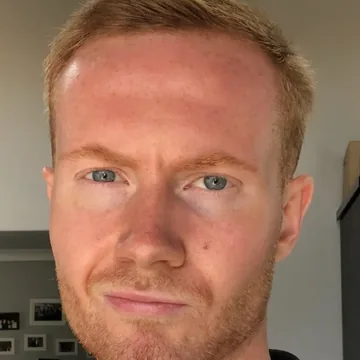
Take the confidential 3-minute self-assessment — a private read on where you actually are. Or talk it through with Gary directly.
Take the self-assessment → Book a confidential chat