Getting help
Recovery Without God: Secular Routes to Sobriety
"I can't do the God stuff." I have lost count of how many times someone has said that to me, usually with a slightly defensive edge, as though they expect me to argue. They have heard that recovery means handing yourself over to a higher power, and for them — an atheist, an agnostic, or simply someone who finds religious language hollow — that feels like a non-starter. So they assume sobriety is shut to them. It isn't.
I want to say this clearly and warmly: you do not need to believe in God to recover. Faith helps some people enormously, and I have deep respect for that. But plenty of people get well and stay well without any of it. If the spiritual framing is your sticking point, the problem is the framing, not your chances. Let me show you the routes that don't require it — and let me reframe the bit that usually trips people up.
Where the "higher power" idea comes from
The reason recovery and religion are so tangled together is largely historical. The 12 Steps, which grew out of Alcoholics Anonymous in the 1930s, lean heavily on the idea of turning your will over to a "power greater than yourself." For decades, that was the dominant model, so for a long time spiritual surrender and getting sober looked like the same thing.
It is worth saying that even within the 12-Step world, many people interpret "higher power" very loosely — the group, the universe, nature, simply something bigger than their own stubborn willpower. That works for some. But if even the loose version feels like a fudge to you, you are not being difficult. You just need a model built on different foundations, and those models exist.
Reframing "powerlessness"
Before the practical options, let me deal with the phrase that snags more people than any other: powerless. The first of the 12 Steps asks you to admit you are powerless over the substance. For some that is a liberation. For others it sounds like surrendering your agency — the last thing you want when you are trying to take your life back.
Here is how I would reframe it without the spiritual wrapping. "Powerless" does not have to mean "helpless." It can simply mean: willpower alone has not been enough, and white-knuckling it in secret hasn't worked. That is not weakness — it is accuracy. Admitting that opens the door to actually doing something different: getting tools, getting support, getting underneath the cause. You are not giving up your power; you are pointing it somewhere that works.
Secular recovery doesn't deny that addiction is bigger than raw willpower. It just locates the answer in skills, understanding and connection — rather than in faith.
SMART Recovery
If you want the structure and community of a group but none of the spiritual content, SMART Recovery is the obvious place to look. It is explicitly secular and built on cognitive-behavioural science. There is no higher power and no powerlessness; instead, meetings teach practical tools — building your own motivation, managing urges, challenging the thoughts that drive using, and constructing a balanced life.
SMART meetings run in person and online, and they feel more like a workshop than a confession. You leave with techniques to use during the week. For a lot of secular-minded people, it offers exactly what they wanted from a fellowship without the part that put them off.
Therapy, CBT and one-to-one work
For many people, the strongest secular route is simply good one-to-one help. Cognitive Behavioural Therapy has a solid evidence base in addiction precisely because it is grounded, practical and entirely non-religious. It works on the chain between your thoughts, feelings and behaviour — the engine of the addiction itself. I have written a plain-English explainer on CBT for addiction if you want to understand what it actually involves.
One-to-one work goes further still, because it gets at your specific reasons for using — the anxiety, the trauma, the boredom, whatever the substance was managing. That is much of what I do, and there is nothing spiritual about it. It is honest, practical, private conversation that targets the cause. For professionals who value discretion, that privacy is often the deciding factor.
You don't have to believe in anything in particular to get better. You have to be honest, you have to get the right help, and you have to stop trying to do it alone. None of that requires faith.
Secular peer support and other options
There is also a growing world of explicitly non-religious mutual support. Secular peer groups meet over video and in person, built around the same powerful ingredient that makes any fellowship work — people who understand, walking the same road — but without the spiritual element. Online recovery communities, forums and apps offer the same connection in a form that suits the private, the rural, or the housebound.
And of course these can be combined. Many people do one-to-one therapy and drop into a secular group and lean on an online community for the hard nights. Recovery is not a belief system you have to be loyal to; it is whatever keeps you well, assembled in whatever shape fits your life.
Picking your path
So if faith isn't your route, what is? Honestly, you find out by trying. Sit in on a SMART meeting. Have an initial conversation with a therapist. Try a secular online group for a fortnight. You are allowed to mix and match, and you are allowed to change your mind. The only real mistake is concluding that because the religious version wasn't for you, none of it is.
It isn't. Sobriety is open to the devout and the godless alike. If you would like a clearer sense of where you stand before you choose a direction, a quick self-assessment is a low-pressure place to begin — and if you'd rather just talk it through with someone who has been there, I'm here for that too.
Frequently asked questions
Can I really recover without believing in a higher power?
Yes. Many people recover and stay well through entirely secular routes — SMART Recovery, CBT and other therapy, one-to-one coaching and non-religious peer support. Faith helps some people, but it is not a requirement for getting better.
What does "powerless" mean if I'm not religious?
You can read it simply as: willpower alone hasn't been enough, and doing it secretly and alone hasn't worked. That is honesty, not helplessness. Accepting it frees you to get tools, support and treatment that actually address the problem.
Is secular recovery as effective as the 12 Steps?
For the right person, yes. Approaches like CBT and SMART have a strong evidence base, just as the 12 Steps work well for many. The best predictor of success is finding an approach you'll stick with — not whether it is religious or secular.
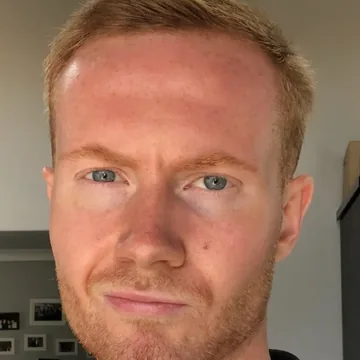
Want recovery without the religious bit?
You don't have to believe in anything to get well — and you don't have to do it alone. A private, confidential chat with Gary is practical, secular, and entirely judgement-free.
Book a confidential chat → Take the free assessment