Understanding addiction
What Is Addiction? A Plain-English Guide
"Addiction" is one of those words everyone uses and almost nobody defines. We throw it around for chocolate, for our phones, for a box set we can't stop watching. So when someone is genuinely worried — about themselves, or about a person they love — it can be surprisingly hard to find a clear answer to a simple question: what actually is it? I want to give you that answer here, in plain English, without the jargon and without the moralising.
I am not writing this from behind a desk. I was an addict myself, and I have spent years since helping other people understand and untangle their own relationship with drink and drugs. So I know how confusing the language can be when you are frightened, and how much it helps to simply see the thing laid out clearly. Let's do that.
A plain definition
Strip away the textbook wording and addiction comes down to one idea: you keep doing something that is harming you, and you find you cannot reliably stop, even when you genuinely want to. The substance or the behaviour has stopped being a free choice and started running on its own momentum.
Clinicians sometimes describe it as a chronic, relapsing condition of the brain's reward and motivation systems. That is accurate, but it can sound cold. In everyday terms, the heart of it is the gap between intention and action — you mean to stop, you promise yourself you will, and then you find yourself doing it anyway. When that gap becomes a pattern, and the harm keeps stacking up, you are no longer talking about a bad habit. You are talking about addiction.
The simplest test isn't how much or how often. It's this: when you try to stop, can you? If the honest answer is "not really," that's the line worth paying attention to.
It's a spectrum, not a switch
One of the most damaging myths is that you are either "an addict" or you are "fine," with nothing in between. Real life does not work like that. Addiction sits on a spectrum, and most diagnostic frameworks now grade it by severity based on how many signs are present.
- Mild. A few warning signs are showing. Perhaps you are using more than you meant to, or it is starting to nag at the back of your mind, but the wheels haven't come off your life. This is the easiest stage to turn around — and the easiest to talk yourself out of taking seriously.
- Moderate. The pattern is more entrenched. Cravings are stronger, attempts to cut down keep failing, and it is beginning to cost you — in money, in sleep, in relationships, in how you feel about yourself.
- Severe. Use is now central. Much of your time, money and headspace revolves around it. There may be physical dependence, and the consequences are serious and visible, yet the using continues regardless.
Why does the spectrum matter so much? Because people wait. They tell themselves they will deal with it "when it gets really bad," as if there were a single dramatic moment when you officially become an addict. There usually isn't. It is a slow slide, and the kindest thing you can do is act while you are still at the mild end rather than waiting for the severe one. You do not need to hit rock bottom before you are allowed to ask for help.
What's happening in the brain
You cannot really understand addiction without understanding a little about the brain's reward system, because that is where it takes hold. I'll keep this simple.
Deep in the brain is a circuit designed to keep us alive. When we do something good for our survival — eat, connect with others, achieve something — it releases a chemical called dopamine, which registers as pleasure and, crucially, tells the brain do that again. It is a learning system. It teaches us to repeat what feels rewarding.
Addictive substances hijack this circuit. They flood it with far more dopamine than any natural reward ever could, and the brain takes note in the strongest possible terms: this is the most important thing you have ever done — repeat it at all costs. Over time, two things happen. The brain turns down its own dopamine response, so everything else in life feels flatter and greyer, and the drug itself delivers less of a high than it used to. You end up chasing a feeling that keeps receding, while needing the substance just to feel normal.
This is why "just use willpower" is such poor advice. You are not fighting a weak character. You are fighting a survival circuit that has been convinced your substance is as essential as food and water. That is also why addiction is no respecter of intelligence or success — the reward system does not care how clever or capable you are.
Understanding the brain science isn't an excuse — it's a relief. It explains why this has been so hard, and it points to why the right help works far better than gritted teeth ever could.
How addiction differs from heavy use
This is the distinction people get most tangled up in, so let's be clear. Plenty of people drink heavily, or use recreationally, without being addicted. The difference is not really the amount — it is the relationship.
- Control. A heavy user who is not addicted can, when they decide to, genuinely cut down or stop. Someone who is addicted tries and finds they can't — the intention is there, the follow-through isn't.
- Consequences. A non-addicted user adjusts when it starts causing real damage. In addiction, the harm keeps mounting — to health, work, money, relationships — and the using carries on anyway.
- Compulsion. Heavy use is a choice that can be set aside. Addiction has a pull to it — cravings, preoccupation, the sense of being driven rather than deciding.
I dig into this further in my guide on dependence versus addiction, because the two often get muddled — you can be physically dependent on something without being addicted, and addicted without obvious physical dependence. For now, the headline is this: it is the loss of control and the continued harm, not the quantity, that separate addiction from heavy use.
If some of this sounds familiar
If you have read this far with a sinking feeling of recognition, I want to say two things. First, noticing early is a strength, not a weakness — it is the opposite of denial, and it puts you in a far better position than most. Second, none of this makes you a bad person. Addiction is a condition, not a character flaw, and it responds to the right help far better than to shame.
Whether you are at the mild end and want to nip it in the bud, or further along and frightened, the path forward is the same: get honest, and get support. You do not have to diagnose yourself or do this alone. A good first step is simply to take stock of where you are — and from there, to talk to someone who understands.
Frequently asked questions
Am I an addict if I can still function day to day?
Possibly. Plenty of people hold down jobs and relationships while addiction quietly progresses underneath — it's so common it has its own name, the high-functioning pattern. Functioning isn't proof you're fine; the real test is whether you can stop when you try.
Is addiction a choice or something that happens to you?
It's both, and neither tells the whole story. The first use is usually a choice, but addiction changes the brain's reward system in ways that make stopping far harder than willpower can manage. I explore this honestly in my guide on whether addiction is a disease or a choice.
Can mild addiction just go away on its own?
Sometimes early patterns ease when circumstances change — but counting on that is a gamble, and the mild stage is precisely when action works best. Far better to take it seriously now than wait to see whether it worsens.
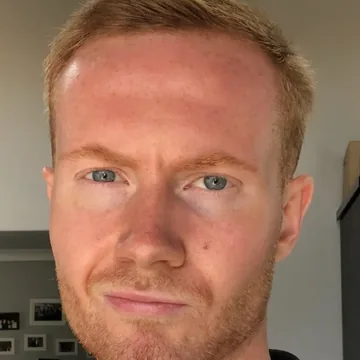
Not sure where you sit on the spectrum?
You don't need a label to talk it through. A private, confidential chat with Gary — no shame, no lecture, just an honest read on where you are.
Book a confidential chat → Take the free assessment